
Kimathi Street Inclusive Mobility Study
Inclusive Street Audits
Women Shaping Cities conducts technical street audits to assess how streets function for diverse users in real-world conditions. Our audits examine infrastructure, safety, accessibility, comfort, and usability, with particular attention to how streets serve or exclude, women, caregivers, children, older adults, and persons with disabilities.
Kimathi Street Inclusive Mobility Study
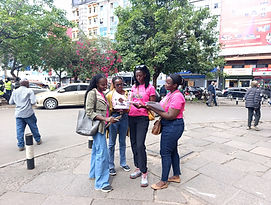
This study was a comprehensive street-level assessment of pedestrian infrastructure, safety, accessibility, and public space performance in Nairobi’s central business district. The study combined infrastructure audits, experiential simulations, user interviews, and stakeholder dialogue to identify structural barriers and opportunities for more inclusive, safe, and dignified street design

The Kimathi Street Inclusive Mobility Study found a clear disconnect between policy commitments to inclusive urban mobility and the lived reality of street-level conditions. While the street functions as a key pedestrian corridor within Nairobi’s CBD, walking infrastructure is discontinuous, accessibility features are inconsistently applied, and supportive amenities such as seating, shade, and safe crossings are insufficient.
Safety risks are structurally embedded, requiring pedestrians to negotiate traffic rather than being protected by design. The study further revealed that caregiving journeys and intergenerational mobility needs remain largely invisible within street design and management practices, highlighting critical implementation and governance gaps that undermine inclusive mobility outcomes.
Experiential Simulation Exercise on Kimathi Street
.jpg)


.jpeg)

